
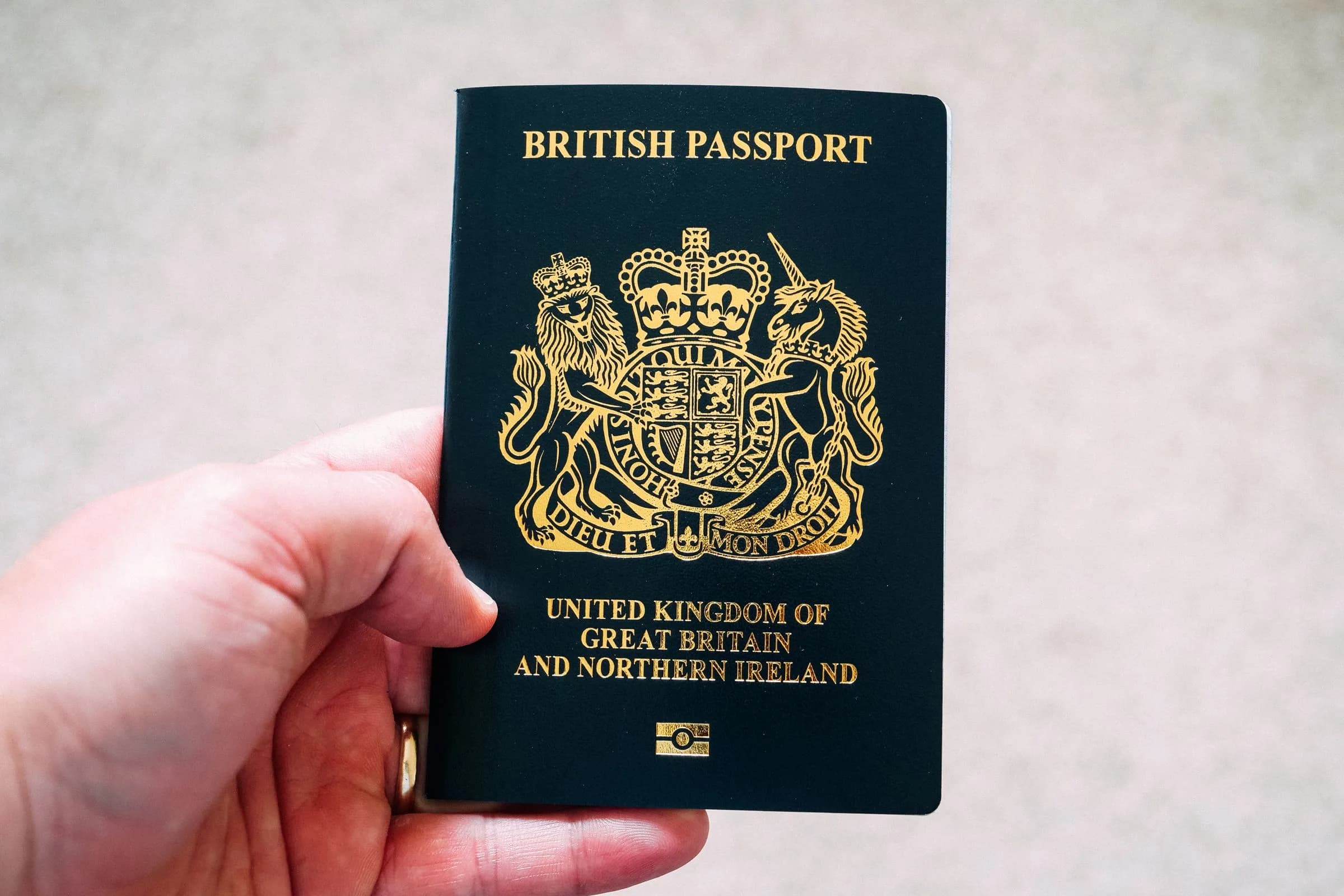
Before a tenancy agreement is entered into, a landlord in England must check that every adult who will live in the property as their only or main home has the right to rent, whatever their nationality. The Home Office landlord's guide, which applies to checks made from 1 October 2026, allows three ways to do a right to rent check: manual documents, a Home Office online check with a share code, or a registered digital provider. A correct, recorded check gives a statutory excuse against a civil penalty scaled from £5,000 to £20,000 per occupier.
The short version
- Check every adult occupier, British citizens included. Under-18s are not checked.
- Check before the agreement is entered into, and for time-limited permission no earlier than 28 calendar days before.
- Keep a dated copy for the tenancy plus at least one year, and diary a follow-up for anyone whose right to rent has an end date.
Who has to be checked, and who is exempt?
The Home Office guide says to check all adults who will use the property as their only or main home, named on the agreement or not, written or oral. A partner who moves in later, or a lodger, counts.
Exempt arrangements include social housing, council-arranged homelessness accommodation, care homes, qualifying hostels and refuges, mobile homes, tied accommodation, halls of residence and leases of seven years or more that neither side can end earlier.
The duty sits with the landlord unless an agent accepts it in writing. Under section 25 of the Immigration Act 2014 a business agent is liable only if it was under a written obligation to do the checks. A tenant who sublets or takes in a lodger carries the duty for that person.
When does a right to rent check have to happen?
For British and Irish citizens and others with an unlimited right to rent, any time before the agreement is entered into. For time-limited permission, no earlier than 28 calendar days before. The guide treats the agreement as entered into when it is signed, or when the occupier moves in if that comes first. In a shared house, check each adult before they move in.
Which route should you use?
| Route | Typical occupier | What you keep |
|---|---|---|
| Manual document check | British or Irish citizen, or anyone with accepted original documents | Dated, unalterable copy of the originals |
| Home Office online check | Anyone with an eVisa, including settled and pre-settled status | PDF or HTML of the profile page |
| Registered digital provider | British or Irish passport holders and some digital documents | The provider's output and any facial comparison |
Manual checks need the originals, seen with the occupier present, in person or on a live video call with the originals in your hands. A share code has nine characters, starts with "R" and is valid for 90 days. You enter it with the date of birth on GOV.UK and compare the photograph with the person. British and Irish citizens cannot get a share code. GOV.UK says you cannot insist on one if the tenant has accepted original documents.
If someone has no documents or code, use the Landlord Checking Service. It answers within two working days, and the guide says to wait for it before signing.
Which documents are accepted in a manual check?
- One document, no follow-up: a British passport (current or expired), an Irish passport or passport card (current or expired), or a certificate of registration or naturalisation as a British citizen.
- Two documents, no follow-up: a pair from List A, Group 2 of the guide's Annex A, such as a UK birth certificate and a current UK driving licence.
- One document, with a follow-up: a current passport or travel document endorsed with a time-limited stay (List B).
The discrimination code says not to treat a tenant less favourably for offering a pair of documents instead of a passport.
What changed on 1 October 2026, and what happened to BRPs?
S.I. 2026/700 brought in revised codes of practice on 1 October 2026. If you choose a digital provider, it must now be on the government's register with a right to rent note, and facial recognition may only be used through one. Such providers can verify British and Irish passports expired up to six months. Manual and online checks remain available, and the document lists now include digital versions issued by the authority.
Biometric residence permits stopped being issued on 31 October 2024, and GOV.UK says you cannot accept biometric residence cards or permits. Ask for a share code instead, because someone who holds only an eVisa must use the online service. Visa vignettes stopped being issued on 1 July 2026, though a valid short-validity vignette can support a manual check for someone without an online account yet.
How long do you keep records, and when is the follow-up?
Keep each record for the tenancy and at least one year afterwards, then destroy it securely. An unlimited right needs no follow-up. With time-limited permission, the excuse lasts 12 months from the check or until the permission or its document expires, whichever is later. The online service shows the date.
Do the follow-up before that date. If the occupier cannot show a continued right, report to the Home Office as soon as reasonably practicable and before the excuse expires. Under section 24(6) that report keeps your excuse if the first check was correct, and the guide says you need not end the tenancy. Failing to report a lost right can also be an offence under section 33A(10) if you know or have reasonable cause to believe the right has ended.
What are the penalties for getting it wrong?
The code in force from 1 October 2026 sets this scale per occupier:
| Occupier | First breach | Repeat within 3 years | First breach paid in 21 days |
|---|---|---|---|
| Lodger | £5,000 | £10,000 | £3,500 |
| Other occupier | £10,000 | £20,000 | £7,000 |
The ceiling in section 23(2) is £20,000, raised from £3,000 by S.I. 2024/81 from 13 February 2024, for contraventions not wholly before then. The excuse is lost if, for example, you cannot produce evidence, or a false document or impostor was reasonably apparent.
Section 33A of the 2014 Act makes it an offence to let to an adult you know, or have reasonable cause to believe, is disqualified. There is an exception for someone with a limited right to rent whose eligibility period has not expired, unless the Home Office has given notice. The maximum on indictment is five years' imprisonment, a fine or both. It is a defence to have taken reasonable steps, within a reasonable period, to end the tenancy. The excuse answers a civil penalty, but not if you knew the letting was unlawful (section 24(5)). The offence depends on what you knew.
How do you avoid discrimination?
The discrimination code says to apply the same process to every applicant, including people you assume are British, and to offer another route where a digital one is unavailable. Refusing a tenant for receiving benefits or having children is a separate rule, covered in our article on the ban on refusing tenants with benefits or children.
How does the 1 May 2026 tenancy reform fit in?
We searched the Renters' Rights Act 2025 on legislation.gov.uk on 17 October 2026 for "right to rent" and found no change to the duty. Ground 7B in Schedule 2 to the Housing Act 1988 lets a court order possession once the Home Office has given written notice naming a disqualified occupier. Section 8 sets a two-week notice, covered in our Section 8 notice guide.
A periodic tenancy has no end date to prompt a recheck, so on our reading you should diary each follow-up date. The guide treats adding an adult as a new agreement, so check all adults.
A worked example
An illustration with invented dates. A landlord lets an Edmonton flat to Ana, a British passport holder, and Tomas, who has a time-limited work visa held as an eVisa.
| Date | What happens |
|---|---|
| Friday 23 October 2026 | Earliest day to check Tomas, 28 days before signing. |
| Monday 2 November 2026 | Tomas gives a share code. The landlord matches the photo and saves the profile page. Ana's passport is checked and copied. |
| Friday 20 November 2026 | Agreement signed. |
| Monday 1 March 2027 | A third adult joins, so all three are checked again. |
What is still open?
- OfDIA's blog says version 1.1 of its digital right to rent code came into force on 2 September 2026, when a certifying body was accredited. Providers certified to the earlier 0.4 code stay valid for now, so ask which version they hold.
- The guide and code pages on GOV.UK show no update after 1 October 2026.
To talk through who carries out the checks on your letting, speak to our lettings team. Our landlord legislation guide sets the check beside your other duties, and tenants can read referencing and right to rent.
Questions readers ask
Do I have to check a British citizen?
Yes. The Home Office guide says to check every adult who will live in the property as their only or main home, whatever their nationality. British and Irish citizens cannot get a share code, so check their passport or other accepted original documents, or use a registered digital provider if the tenant is happy to.
Is a screenshot of a share code enough?
No. The guide says it is not sufficient to rely on what the tenant sees on their own screen or on printed copies of the output. You enter the share code and the tenant's date of birth into the Home Office landlord service yourself, compare the photograph with the person, and save the profile page as a PDF or HTML file.
Can I insist that a tenant uses the online share code service?
Not where the tenant can prove their right to rent with an accepted original document. GOV.UK says you cannot insist they use the online service instead. The 2026 discrimination code also says you must not treat people less favourably because of the way they evidence their right to rent.
How long must I keep the records of a right to rent check?
For as long as the tenancy lasts and for at least one year after it ends, according to the Home Office guide. After that the copies should be securely destroyed. Keep them somewhere you can find them quickly, because the guide expects you to produce the evidence if the Home Office asks.
What happens if I rent to someone without the right to rent?
You may face a civil penalty. The Home Office scale is £10,000 per occupier for a first breach and £20,000 for a repeat within three years, and half those amounts for a lodger. A correct check before the agreement is entered into gives you a statutory excuse. It can also be a criminal offence if you know, or have reasonable cause to believe, an adult is disqualified (there are exceptions).
Sources
- Home Office, Landlord's guide to right to rent checks, 1 October 2026.
- Home Office, Code of practice on right to rent, in force 1 October 2026.
- GOV.UK, Checking your tenant's right to rent and eVisas, read on 17 October 2026.
- legislation.gov.uk, Immigration Act 2014, section 22, read on 17 October 2026.
- legislation.gov.uk, Housing Act 1988, section 8 and Schedule 2, read on 17 October 2026.
- OfDIA, Supplementary code for digital right to rent checks (1.1), 1 September 2026, and Updating the supplementary codes to version 1.1, 3 September 2026.
- legislation.gov.uk, Immigration Act 2014, sections 24 and 33A and S.I. 2026/700, read on 17 October 2026.