
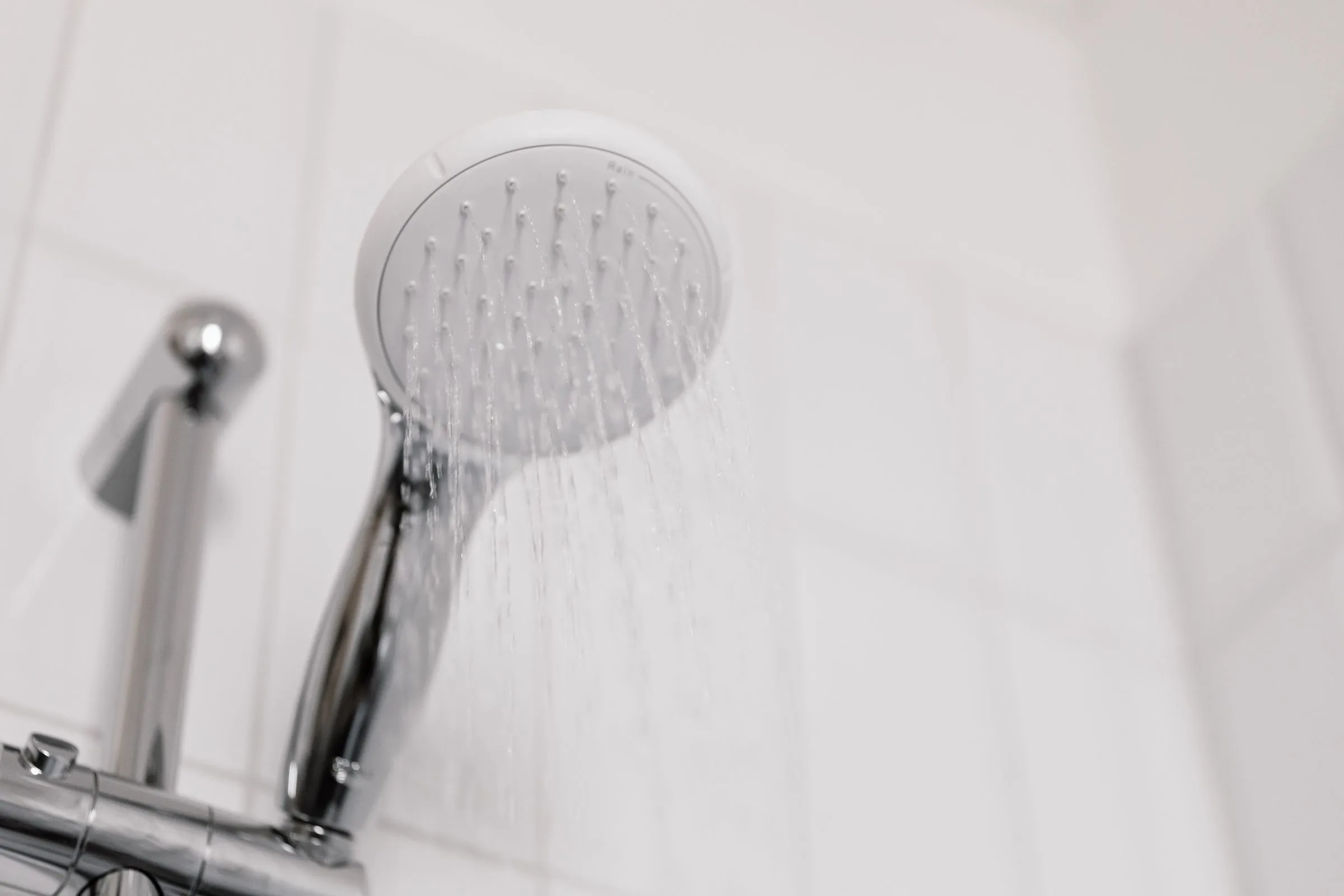
A landlord letting a home in England needs a legionella risk assessment, according to HSE, but it can be a simple one that the landlord carries out personally. HSE says the duty is to assess the risk to tenants and keep it controlled. It also says health and safety law does not require landlords to obtain a “legionella test certificate”. On HSE’s account there is no fixed renewal date for a landlord.
The short version
- The duty, per HSE: assess the risk of tenants being exposed to legionella, and control it with simple, proportionate steps.
- Who can do it: most landlords can, with no training or accreditation.
- Certificate: HSE says the law does not require a legionella test certificate, and sampling is not usually needed.
- Records: not necessarily required for a landlord. HSE says it may be wise to keep them.
- Review: no set interval. Review when something changes.
- 2026: the new housing-hazard guidance replaces the 2006 version and its Water Supply profile covers legionella. The Awaab’s Law consultation is open.
Do landlords need a legionella risk assessment?
Yes, on HSE’s account. HSE’s landlord page says anyone renting out a property they own under a lease or licence shorter than seven years has a duty to assess the risk of tenants being exposed to legionella, and that this does not require an in-depth, detailed assessment.
HSE treats landlords as self-employed under section 53 of the 1974 Act. The legal route runs through section 3(2) of the Health and Safety at Work etc Act 1974, a self-employed person’s duty to others so far as is reasonably practicable. The 2015 regulations apply that duty to any activity that may pose a risk to someone else’s health and safety, which on our reading includes letting a home with a water system. COSHH regulation 6 requires a suitable and sufficient assessment, and regulation 3(2) applies COSHH to such a self-employed person.
HSE’s Approved Code of Practice, L8, names landlords as dutyholders and says all systems need an assessment but not all need elaborate controls. Following it is enough to comply on the points it covers. Failing to discharge a section 3 duty is an offence under section 33(1)(a).
Is a legionella certificate a legal requirement for landlords?
HSE’s landlord page says health and safety law does not require landlords to obtain or produce a “legionella test certificate”. Its testing page says sampling is not usually required for hot and cold water systems. It may be needed where there is doubt that controls work or temperatures are not consistently met.
On records, HSE says landlords are not necessarily required to record their findings, because the written duty applies to employers with five or more employees (COSHH regulation 6(4)), but a record is wise. HSE’s general records page, written for all dutyholders, says records should be kept while current and for at least two years afterwards.
HSE says inspectors do not proactively inspect homes or ask landlords for evidence. If a tenant caught Legionnaires’ disease from the water system, the landlord may face prosecution and would have to show a court that the duty was met. So what: a dated note of what you checked is cheap proof.
How do you carry out a simple legionella risk assessment?
- Describe the system. Note any loft tank, hot water cylinder or combi boiler, and the outlets.
- Compare it with HSE’s low-risk example (table below).
- Look for risk factors. HSE lists water at 20 to 45°C, stored or recirculated water, rust, sludge or scale, shower droplets, and people more susceptible to infection.
- Add simple controls. HSE says to “keep the hot water hot, cold water cold and keep it moving”. It lists flushing before letting, a tight lid on any cold water tank, a cylinder setting that stores water at 60°C, and removing redundant pipework.
- Tell your tenants what to do (see below).
- Note it down and review it when something changes.
| HSE’s typical low-risk example | What to check in your home |
|---|---|
| Daily use turns over the whole system | Is the home occupied, or empty for weeks? |
| Cold water direct from the mains, no stored tanks | Is there a loft tank? |
| Hot water from instantaneous or low-volume heaters, outlets at 50°C | Combi boiler, electric shower or cylinder? |
| Only toilets and wash hand basins | Is there a shower? |
HSE says risks in most residential settings are generally considered low because of regular water use, and a simple assessment may show no further action is needed. This example is for a single home with a small domestic system. Blocks, HMOs and shared tanks or pipework are different, so ask a competent person. A home with a shower falls outside the last row: HSE says showers create droplets that can be inhaled, but that regular use reduces the risk and tenants should clean showerheads.
What temperatures do the guidance documents give?
| Source | Hot water | Cold water |
|---|---|---|
| HSE landlord page | Cylinder set so water is stored at 60°C; low-risk example outlets at 50°C | Not given |
| HSG274 Part 2 (2024), paragraph 2.6 | Stored at least 60°C, reaching 50°C at outlets within one minute | Below 20°C where possible |
| Housing hazards guidance, Part 2 (June 2026), Water Supply | Above 55°C to prevent growth (its Water Supply profile); baseline indicator of storage at a minimum of 60°C and a maximum of 45°C at bath taps and showers, against scalding | Below 20°C |
These are guidance figures, not legal limits, and the housing guidance says its baseline indicators are not minimum standards. Hotter stored water raises scald risk, and HSG274 paragraph 2.6 says to consider young children, older and disabled people and people with sensory loss. Thermostatic mixer valves are the usual way to cap tap temperature. Pick the temperatures your assessment supports and write them down.
What about empty homes and gaps between tenancies?
HSE says water should not stagnate. As a general principle, outlets should be used at least once a week, and a long vacancy may call for a flushing regime or draining the system.
An invented example: a tenant leaves on 1 February 2027 and the next moves in on 15 March 2027, six weeks later. You flush every outlet for several minutes on 8, 15 and 22 February and 1 and 8 March, and again before move-in. HSG274 says that once weekly flushing starts it should be sustained and logged (paragraph 2.78, written for larger systems), so keeping the dates is sensible. Entering an occupied home to check showerheads needs notice, which our article on landlord access covers.
What should tenants do?
HSE says tenants should be advised to leave the cylinder temperature alone, to clean and disinfect showerheads regularly, and to tell the landlord if the hot water is not heating properly. HSE frames this as advice. HSG274 says landlords should also explain the risk. HSE’s symptoms page says the first symptoms are flu-like, the disease is not known to spread from person to person, and anyone worried should see a doctor.
If an agent manages the home, HSG274 says the management contract should state who is responsible. Otherwise the duty falls on whoever controls the premises, usually the landlord.
What changed in 2026, and what is still open?
23 June 2026: housing hazards guidance. The new operating guidance replaces the 2006 version. S.I. 2026/571 amended the Housing Health and Safety Rating System regulations from that date, and regulation 10 applies the changes to council inspections started on or after it. The statutory hazard called water supply, in Schedule 1, is an inadequate supply of water free from contamination. The new operating guidance says that hazard includes legionella and calls domestic infection rare. Councils must act on category 1 hazards and may act on category 2.
Awaab’s Law. Today it applies only to social housing. The government’s consultation, published 9 October 2026 and closing at 11.59pm on 18 December 2026, asks whether private rents should cover every rating-system hazard except overcrowding. Water supply is on the list, and in social housing it is planned for Phase 3, 2027. Nothing is decided for private landlords.
HSE. We found no announced revision to L8 (still the 2013 edition) or the landlord page. Our landlord legislation guide covers the wider duties. Gas safety and electrical safety are the checks that do have a fixed certificate.
If you let a home in Edmonton, ask for a free lettings valuation or contact our lettings team.
Questions readers ask
Do I need a legionella certificate to rent out a property?
HSE says health and safety law does not require landlords to obtain or produce a legionella test certificate. On HSE's account the duty is to assess the risk of exposure and control it in a proportionate way. A contractor’s report is optional. Keep a dated note of what you assessed and did, because a landlord may have to show a court that the duty was met.
Can I do my own legionella risk assessment as a landlord?
Yes. HSE says most landlords can assess the risk themselves and do not need to be professionally trained or accredited. If you do not feel competent or inclined to do it, you can arrange for someone to do it for you. HSE says that in most cases the actions are simple and straightforward, so compliance need not be burdensome or costly.
How often must a landlord review a legionella risk assessment?
HSE says the law does not prescribe an annual or two-yearly review. Review it periodically and whenever something changes, for example a new shower, a new water tank or a long empty period. Where access to an occupied home is difficult, HSE says checks can be made during mandatory visits such as gas safety checks or routine maintenance visits.
Does a combi boiler mean there is no legionella risk?
It lowers the risk but does not remove the need to assess. HSE says the risk is further lowered where instantaneous water heaters, such as combi boilers and electric showers, are fitted because no water is stored. Every water system still needs a risk assessment, so consider showers, empty periods and any loft tank, and advise tenants to clean showerheads.
What should a landlord do about legionella between tenancies?
HSE says that as a general principle outlets should be used at least once a week, and suggests a flushing regime, or draining the system if a home stays empty for a long time. It also lists flushing the system before letting. HSG274 (paragraph 2.78, written for larger systems) says that once weekly flushing starts it should be sustained and logged, as lapses can undo the benefit.
Sources
- Health and Safety Executive, Legionella and landlords’ responsibilities, updated 30 September 2024.
- Health and Safety Executive, Testing and monitoring and What Legionnaires’ disease is, updated 30 September 2024; Keeping records and Identify and assess sources of risk, updated 25 November 2024.
- Health and Safety Executive, L8 (fourth edition, 2013) and HSG274 Part 2 (2024), read on 17 October 2026.
- legislation.gov.uk, Health and Safety at Work etc Act 1974 section 3 and section 33; 2015 Prescribed Undertakings Regulations; COSHH 2002, regulations 3 and 6, read on 17 October 2026.
- legislation.gov.uk, S.I. 2026/571 and HHSRS Regulations 2005, Schedule 1, read on 17 October 2026.
- GOV.UK, HHSRS operating guidance, published 23 June 2026.
- GOV.UK, Extending Awaab’s Law to private rented tenancies, published 9 October 2026.