
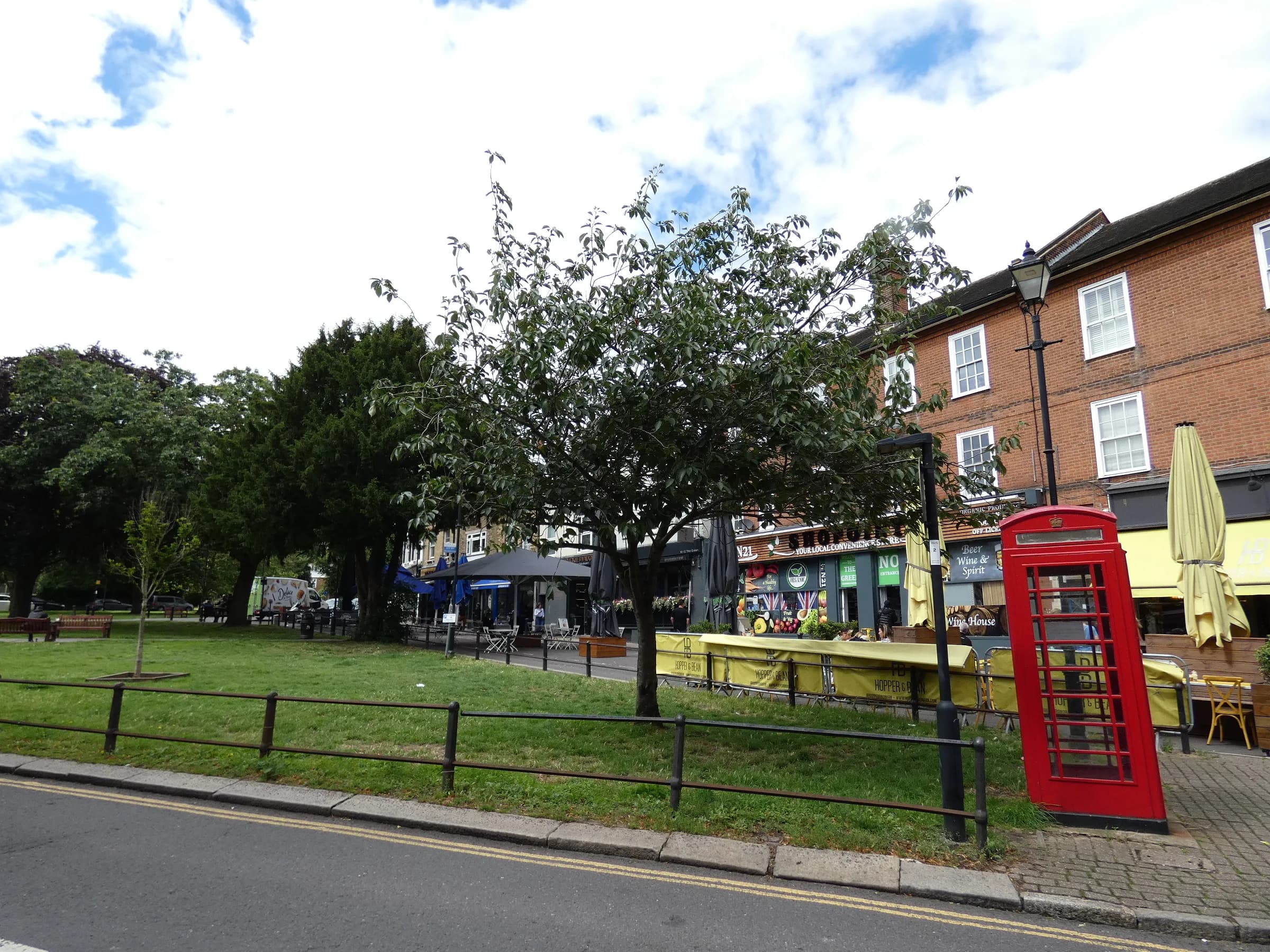
Winchmore Hill
Winchmore Hill is a village-style residential area in the London Borough of Enfield, centred on The Green and a Victorian station on the Great Northern line to Moorgate.
Area guide
Living in Winchmore Hill
Winchmore Hill sits on a hill about two kilometres south of Enfield town centre, in the London Borough of Enfield. Its historic heart is The Green, an irregular triangle of lawns and mature trees where five roads meet, with shops, restaurants and older cottages close by. Enfield Council protects the village core through the Winchmore Hill Green conservation area, designated in 1968, and the separate Vicars Moor Lane conservation area, designated in 1970. Grovelands Park, a registered historic landscape, borders the village to the west.
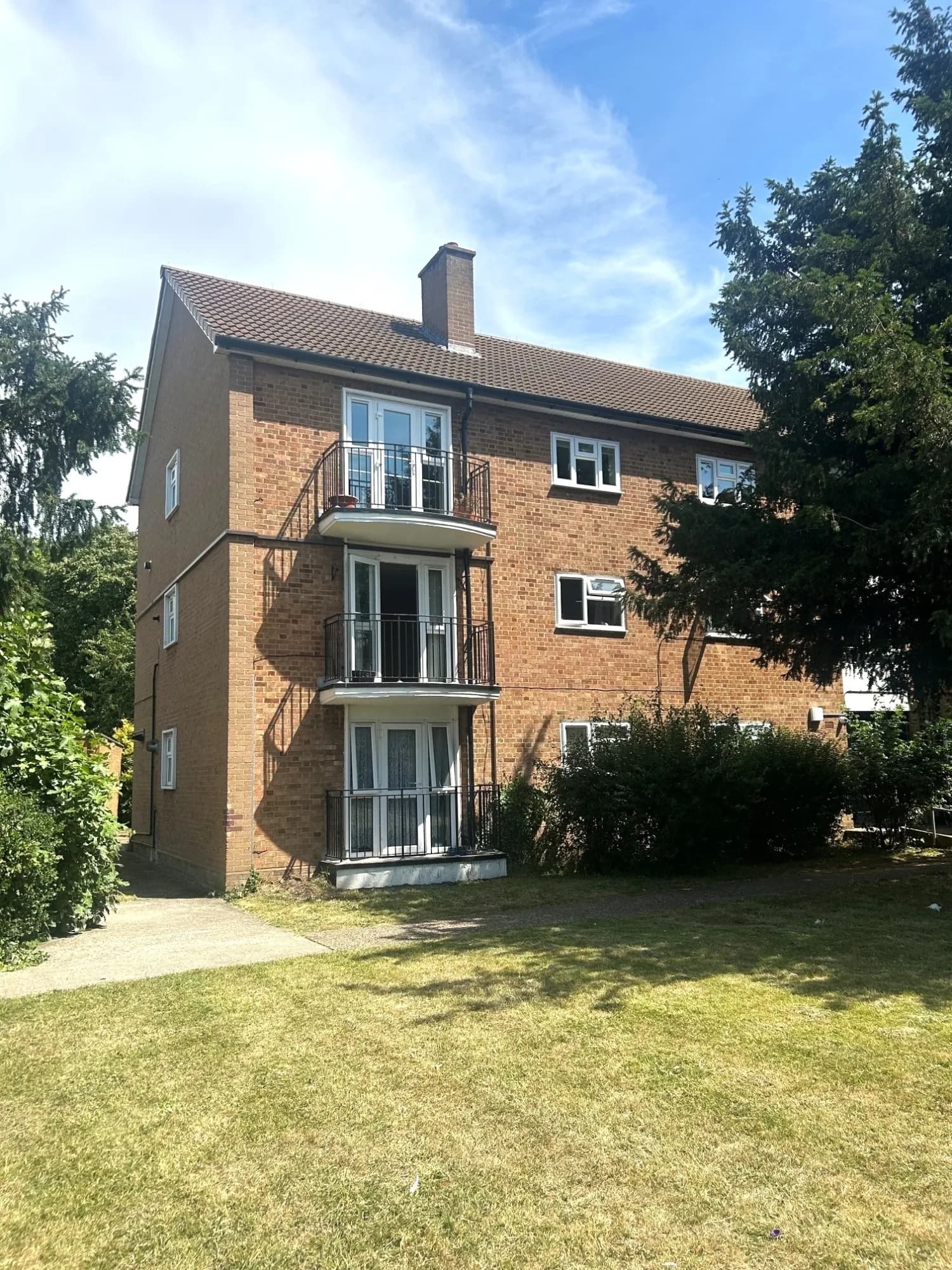
The housing reflects several periods. Around The Green and along Wades Hill and Wilson Street there are Victorian and Edwardian terraces, shops with flats above and a handful of early 19th-century cottages. Church Hill is wider and leafier, with detached houses, interwar semi-detached houses and blocks of flats set in planted gardens. The railway station opened in 1871, but the surrounding land stayed largely undeveloped until the Taylor family of Grovelands sold it in 1902; the wider district was then built up as a suburb, largely complete by 1935. Later building has mostly been blocks of flats on the remaining open plots.
Winchmore Hill has no Tube station. Its railway station, in Travelcard Zone 4, is on the Great Northern line, with trains towards Moorgate in the City and out to Hertford North and Stevenage. The nearest Piccadilly line station, Southgate, is just under two kilometres away in a straight line, and TfL bus routes also serve the village. The village centre falls within the N21 postcode district.
Transport
Getting around Winchmore Hill
Winchmore Hill station is on the Great Northern Hertford Loop line, with trains to Moorgate (Northern, Circle, Hammersmith & City and Metropolitan lines) and to Hertford North and Stevenage. TfL bus routes also serve the village centre.
Winchmore Hill
Great Northern · Zone 4
Station managed by Great Northern; trains run towards Moorgate and towards Hertford North and Stevenage. No Tube station in the village.
Parks, shops and schools
What Winchmore Hill has nearby
Parks and green space
- Grovelands Park (opens in a new tab)18th-century landscape park by Humphry Repton, registered Grade II*, run by Enfield Council with a playground, bowling green, tennis courts and sports pitches.
- The Green, Winchmore Hill (opens in a new tab)Lawns and mature trees at the centre of the Winchmore Hill Green conservation area.
High street and shopping
The village centre is formed by the shops around The Green, along Wades Hill and on the south side of Station Road opposite the station. The council's appraisal describes a mix of shops, restaurants and housing and records surviving Victorian and Edwardian shopfronts.
- The Green
- Wades Hill shops
- Station Road parades
Schools
State schools in Winchmore Hill are overseen by Enfield Council as the local education authority. Use the council's admissions pages and the official GOV.UK and Ofsted tools below to check individual schools, admission rules and current inspection reports.
A little history
The first documentary reference to Winchmore Hill dates from 1319. It remained a small village after the railway station opened in 1871; after the Taylor family of Grovelands sold land in 1902 it was built up as a suburb, a process largely complete by 1935.
Local favourites
Worth knowing in Winchmore Hill
Roads and pockets
- The Green — the historic village centre: an irregular triangle of lawns and mature trees where five roads meet, with a Grade II listed K6 telephone kiosk at its eastern end
- Wades Hill — Victorian and Edwardian shops give way to terraced houses, including early 19th-century cottages at nos. 17–29 that are listed Grade II
- Church Hill — a wide, gently curving road with Woodside Cottages, St Paul's Church, the Quaker Meeting House and 1930s buildings set in planted gardens
- Wilson Street — a quiet cul-de-sac of late Victorian terraces, some with cast-iron porches, noted in the council's conservation area appraisal
- Vicars Moor Lane — its north side forms a separate conservation area of early to late 19th-century houses, several listed Grade II
- Hoppers Road — the southern approach to The Green, with the Grade II listed Old Bakery and the Victorian Compton Terrace
Places worth a visit
- Winchmore Hill Quaker Meeting House, Church Hill — Grade II listed meeting house built in 1790–91, standing in its own burial ground; Quakers have met in the village since the 1680s
- Grovelands Park — Humphry Repton landscape registered Grade II*, opened as a public park in 1913, with John Nash's Grovelands House (Grade I) in the grounds
- Church of St Paul, Church Hill — Grade II listed Gothic church dating from 1828
- The Old Bakery, 212 Hoppers Road — Grade II listed building from the early 18th century, one of the oldest surviving buildings in the village
- Winchmore Hill station — single-storey gabled station building of 1871 that keeps its timber canopy and bargeboards
Compiled from public sources such as council guidance and local history records, and reviewed October 2026. These are not recommendations or valuations.
Property market
Property prices in Winchmore Hill
Median sold price
£650,000
216 sales in the 12 months to July 2026
| Property type | Median | Sales |
|---|---|---|
| Detached | £1,220,000 | 27 |
| Semi-detached | £900,000 | 65 |
| Terraced | £675,000 | 43 |
| Flats & maisonettes | £368,000 | 81 |
Based on completed sales registered at postcodes in N21, which only approximate the area's boundaries and include sales we did not handle. Standard (category A) residential sales for value only: the Land Registry’s category B, which includes repossessions, buy-to-lets identified by a mortgage and sales to non-private individuals, is not counted. Contains HM Land Registry data © Crown copyright and database right 2026. This data is licensed under the Open Government Licence v3.0.
Available now
Homes in Winchmore Hill
Questions
Winchmore Hill: common questions
Quick answers about living in and moving to Winchmore Hill.
Which council covers Winchmore Hill?
Winchmore Hill is in the London Borough of Enfield and is also an Enfield Council ward. Enfield Council is the authority that charges Council Tax; the band and charge for a particular property are set out on the council's website.
Which station serves Winchmore Hill and what zone is it in?
Winchmore Hill station is in Travelcard Zone 4 and is managed by Great Northern. Great Northern trains run through it between Moorgate in the City and Hertford North or Stevenage. There is no Tube station in the village; the nearest Piccadilly line station, Southgate, is just under two kilometres away in a straight line.
What postcode district is Winchmore Hill in?
The centre of Winchmore Hill, including The Green and the station, is in N21. Enfield Council's ward profile notes that the Winchmore Hill ward is also served by N13, so check the full postcode of any particular address.
Which parks are near Winchmore Hill?
Grovelands Park borders the village to the west. It is a Humphry Repton landscape registered Grade II*, opened as a public park in 1913 and managed by Enfield Council. The Green itself is a small area of lawn and mature trees in the middle of the village.
Are there conservation areas in Winchmore Hill?
Yes. Enfield Council has designated the Winchmore Hill Green conservation area (1968, extended in 1974 and 2009) and the Vicars Moor Lane conservation area (1970). The council also has Article 4 directions covering these areas, which withdraw some permitted development rights, so the planning team can confirm what applies to a specific property.
Location
Where Winchmore Hill is
Nearby
Nearby areas
Value my property
Selling or letting in Winchmore Hill?
Talk to our local team about the market in Winchmore Hill — book a free, no-obligation valuation or call the office.